
How to Plan a Multi-Day Backpacking Trip: 4 Steps and a Checklist

The short answer: to plan a multi-day backpacking trip, pick a route that fits your time, fitness and the season, then check permits, water sources and campsites along the way. Next, dial in your gear, plan your food and water for every day plus a little extra, and leave your trip plan with someone at home. Finally, do a full test run at least 10 days before you go so you can fix problems at home instead of on the trail.
You understand backpacking. Even if you have never spent an evening beneath the stars or strapped on a full backpack, I promise it is exactly what you think it is. You put everything you need in a backpack, walk with it, and then use it all. It is dirty, uncomfortable, incredible and worth every moment.
A walk through your local gear shop or a quick scroll through online guides might make the process feel overwhelming, but planning a multi-day backpacking trip can be simple as well as safe. In four steps, you can plan out your dream backpacking trip. Are you ready? Let's make your trip a reality.
How do you plan a multi-day backpacking trip?
| Step | What to do | When |
|---|---|---|
| 1. Pick a route | Choose a distance, check conditions, permits, water and campsites, plan transport and get maps | 1 to 3 months out (earlier for popular permits) |
| 2. Dial in your gear | Add a larger pack, sleep system, kitchen and water treatment to your hiking kit | 3 to 4 weeks out |
| 3. Plan food and water | Plan every meal and snack for each person, plus emergency food and enough water between refills | 2 weeks out |
| 4. Do a test run | Pack everything, walk with it, set up camp and cook a meal at home | At least 10 days out |
Step 1: Pick a route

When choosing a route, you will need to think about time, fitness, conditions, permits, transport and navigation.
Time: how long should your first trip be?
Think through how long you want your trip to be. If this is your first backpacking trip, aim for a single overnight or a two-night trip. Consider the time of year as well, and choose a location and route you can handle for the season and length.
Fitness: how far can you hike each day?
Hiking with a full pack is slower than day hiking. Many beginners plan 5 to 10 miles a day, with less on days with big climbs. You can always train for a trip if you have the time: pick a route you are sure you can finish while wearing a backpack, or set the route as a realistic training goal and build up to it with at-home workouts and shorter hikes with weight.
Conditions: what is the trail like right now?
Location, elevation and season all matter. Be sure you know the conditions of the trail at the time you plan to go. Are there seasonal water crossings? Could the trail be muddy, icy or snow covered? You can find this in recent trail reports, or by calling the agency that manages the area, such as a ranger district, national forest, national park or state park.
Permits and campsites: do you need a reservation?

Many national parks and wilderness areas require an overnight permit, and popular routes may use a lottery or fill up months in advance. Ask the managing agency or check Recreation.gov. While you are at it, find out where you are allowed to camp, whether campfires are allowed and whether you need a bear canister. If you are camping away from established sites, read up on how to pick a good backcountry campsite.
Transport: who is dropping you off and picking you up?
Part of choosing a route is planning how you get to the trailhead and back from your end point, especially on a one-way trip. Arrange drop-off and pick-up, and leave your trip plan with the person picking you up and a trusted friend. Include your route, campsites, the day and time you plan to finish, and a time (with room for small delays) when they should call for help.
Navigation: what maps do you need?
Well-traveled trails are the easiest to navigate, while less-traveled trails and wilderness areas take more research and skill. You need a detailed topographic map of the area marked with your campsites and places to refill water. CalTopo and Gaia GPS are both great for planning and printing maps. Even if you plan to bring your phone and a charger, download offline maps and print a paper copy of your route just in case. Our guide to staying found on the trail covers what to do if you get turned around.
Step 2: Dial in your gear

Fortunately, if you are already a hiker, most of your gear is ready. Start with the 10 essentials, then add what you need to sleep, cook and carry it all:
- A larger backpack. Most multi-day trips call for a pack in the 45 to 65 liter range. Learn how to pack and fit it before you go.
- A sleep system. A tent or other shelter, a sleeping bag or quilt and a sleeping pad. Our guides to building a sleep system and choosing a sleeping pad walk you through it.
- A kitchen. A small stove, fuel, a pot, a lighter and a spoon.
- Water treatment. If you usually don't carry a filter on day hikes, you'll need one now. Here are 6 ways to purify water on the trail.
- Extra socks. Pack two or three pairs of merino wool hiking socks: one to wear, one drying on the outside of your pack and one dry pair saved for camp and sleeping. Dry feet are your best defense against blisters.
If you need any new gear, give yourself time to use it before the trip and break it in. Borrowing or renting is a great way to try backpacking without buying everything at once, and our guide to investing in essential hiking gear can help you decide what is worth buying. Every ounce adds up over several days, so it is also worth a look at how to trim your pack weight.
Happy feet, mile after mile
Merino wool hiking socks knit in the USA that stay comfortable for days on the trail, backed by a lifetime guarantee.
Men's hiking socks → Women's hiking socks →Step 3: Plan food and water

The simplest backpacking foods are dehydrated meals, but camp chefs might prefer something more creative, like homemade dehydrated meals or a few backpacking meal hacks.
- Plan every meal for every person. Write out breakfast, lunch, dinner and snacks for each day of the trip, for everyone going.
- Pack enough calories. A common guideline is about 1.5 to 2.5 pounds of food per person per day, depending on your size, the weather and how hard the hiking is.
- Bring extra. Always pack one extra meal or a day's worth of snacks that you only eat in an emergency.
- Count your water. Plan about half a liter per hour of hiking in moderate weather, and more in heat or at altitude. Add the water you need to cook and clean up, and mark every reliable refill point on your map.
- Shop in two rounds. Buy non-perishables early, and wait until right before your trip to buy anything perishable.
Step 4: Do a test run

At least 10 days before your trip:
- Pack your bag. Everything.
- Put on your hiking clothes and socks.
- Walk around the block or any short distance.
- Go home or to a park and set up your tent and sleep system.
- Cook a meal using your kitchen set.
- Lie in your tent and sleeping bag for 30 minutes to an hour.
It might be strange, and you might get some funny looks from your neighbors, but this step lets you adjust for comfort and practicality. Once you finish the trial, make your final adjustments. If anything doesn't work well or needs to change, you'll find out at home instead of on the trail.
Multi-day backpacking checklist
- Permit, campsite reservation and trip plan left with someone at home
- Paper map, compass and offline maps on your phone
- Backpack and rain cover or pack liner
- Tent or shelter, sleeping bag or quilt and sleeping pad
- Stove, fuel, pot, lighter and spoon
- Water bottles or reservoir and water treatment
- Food for every meal, plus emergency food
- Bear canister or food bag, if required
- Headlamp, power bank and charging cable
- First aid kit with blister care
- Sun protection: sunscreen, sunglasses and hat
- Rain jacket, warm layer, beanie and gloves
- Two or three pairs of merino wool hiking socks
- Toiletries, trowel and trash bag (pack it all out)
- Knife or multi-tool and a small repair kit
What my first backpacking trip taught me
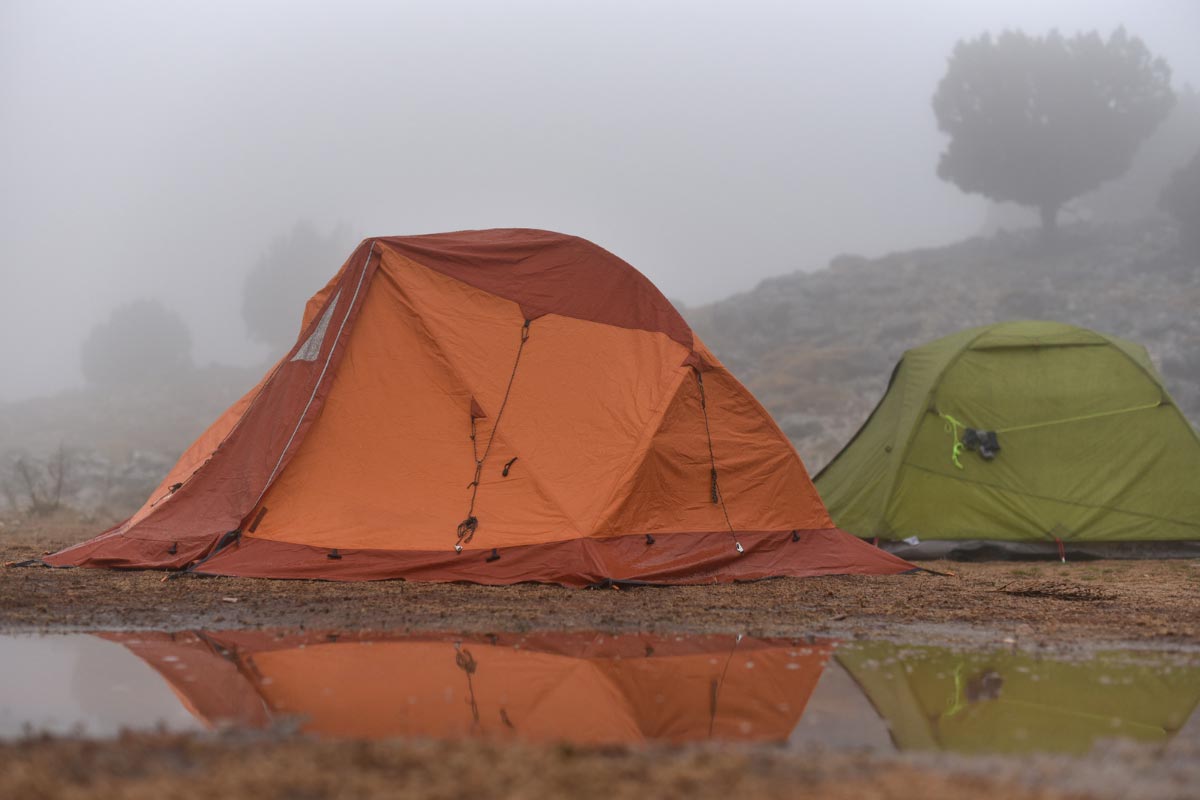
You did it! You are ready to hit the trail and enjoy the incredible experience of being surrounded by nature. My last note to you is to be prepared for the completely unexpected. Why? Here is the story of my very first backpacking trip. Well... my attempted backpacking trip.
It was the middle of summer, and I was so excited to go backpacking for the first time. I had everything set. I was fit from summer hiking, geared up and packed for an overnight trip to a gorgeous alpine lake. I knew the trail. I had a backpacking buddy with lots of experience. We had been watching the forecast for weeks, and it predicted nothing but sunny days and clear skies.
The backpack was heavier than I expected, and I felt its weight more than I anticipated. I learned how to filter water, which was exciting. Overall, the trip was going great! My expectations were not always right, but I was loving every second of going deeper into the wild and learning how backpacking works. We started our hike in a canyon, looking up toward the peaks where our lake sat just below. With all the trees and surrounding mountains, our view of the sky was limited.
We kept hiking, chatting away, with me almost bouncing with the thrill of it. In what felt like the blink of an eye, clouds appeared overhead and it began to drizzle.
We hardly had time to pull out our rain jackets before the rain was pounding, and then turning to hail. The temperature dropped fast. We set up our emergency shelter to hide from the golf-ball-sized ice flying down on us, emptying it from the tarp about every 30 seconds so the shelter wouldn't buckle under the weight. We pulled on our cold weather gear and made hot tea to warm up. The unforecasted hail would not stop. Eventually, we realized we needed to get down from the high elevation and back to the trailhead. We packed everything up and started down, still getting pelted.
As we retraced our steps, the hail began to lighten up. Almost as quickly as it came, it was gone. Aside from broken branches and a very muddy trail, it was a sunny summer day again.
We did not go back up. A buckle on my new backpack was broken, and we were both exhausted and shaken. We went home, watched TV and ate hamburgers. That was the end of my first day backpacking.
I'm not telling this story to scare you out of going. Years later, I love backpacking and would go every week if I could. We still laugh about that trip. The reality is that nature is not controlled, and all of your planning could fail. But if you are prepared for the worst and keep an attitude that embraces the unknown, you will be successful. Read up on backcountry storm safety before you go, then be careful, invite your friends and get out there!
Frequently asked questions
How long should your first backpacking trip be?
One or two nights is ideal for a first trip. It is long enough to learn how your gear, food and body work on the trail, and short enough that a mistake is easy to recover from.
How many miles a day should you backpack?
Many beginners plan 5 to 10 miles a day with a full pack. Plan fewer miles on days with big elevation gain, rough trail or high altitude, and leave time to set up camp before dark.
Do you need a permit to go backpacking?
Often, yes. Many national parks and wilderness areas require an overnight permit, and popular routes can fill up months ahead. Check with the agency that manages the area or on Recreation.gov before you finalize your plans.
How much food should you bring backpacking?
A common guideline is 1.5 to 2.5 pounds of food per person per day. Plan every meal and snack for each day, then add one extra meal or a day's worth of snacks for emergencies.
How much water should you carry backpacking?
Plan about half a liter per hour of hiking in moderate weather, more in heat or at altitude, plus water for cooking. Rather than carrying it all, mark reliable water sources on your map and bring a way to treat water.
What should you leave with someone at home?
Leave your route, campsites, trailhead, car details, who you are with, when you expect to finish and a time when they should contact the authorities if they haven't heard from you.
How many pairs of socks should you bring backpacking?
Two to three pairs work for most trips: one to wear, one drying and one dry pair kept for camp and sleeping. Merino wool socks are a good choice because they resist odor and stay warm when damp.
More backpacking resources
- How to Get Started Backpacking: Tips for Your First Trip
- The 10 Essentials for Hiking: A Beginner's Guide and Checklist
- How to Build a Camping Sleep System
- Do Hiking Socks Make a Difference? How to Choose the Right Pair
- Leave No Trace: The 7 Principles
Pack the right socks
Cushioned merino wool hiking socks knit in the USA, built to prevent blisters and backed by a lifetime guarantee.
Men's hiking socks → Women's hiking socks →Lifetime guarantee · Free US shipping over $50
More hiking and trails posts
See all


Socks for the trail ahead
Shop all-
Crew · Medium Cushion
Men's Merino Wool Hiking Sock - Medium Cushion
Regular price $24.99 USDRegular price$24.99 USDSale price $24.99 USD -
Crew · Medium Cushion
Women's Merino Wool Hiking Sock - Medium Cushion
Regular price $24.99 USDRegular price$24.99 USDSale price $24.99 USD -
Crew · Light Cushion
Men's Merino Wool Hiking Sock - Light Cushion
Regular price $23.99 USDRegular price$23.99 USDSale price $23.99 USD -
Crew · Medium Cushion
Women's Merino Wool Pinstripe Hiking Sock - Medium Cushion
Regular price $24.99 USDRegular price$24.99 USDSale price $24.99 USD


