
What Are the Warmest Socks? 7 Ways to Keep Your Toes Warm All Winter

Short answer: the warmest socks for most people are cushioned merino wool socks that rise at least to crew height and fit your boots without squeezing. Merino traps heat and keeps insulating when damp, cushioning adds a layer of warm air under your foot, and a taller sock covers more skin. Thickness alone isn't enough, though. A sock that's too thick for your boot squeezes your foot, cuts circulation and leaves your toes colder. Dry feet, room to wiggle your toes and a warm core matter just as much.
Here's what actually makes a sock warm, plus seven simple ways to keep cold toes warm on winter hikes, at work and around town.

In this article
- What makes a sock warm?
- What is the warmest sock material?
- 7 ways to keep your toes warm in winter
- Which warm socks are best for hiking, work and everyday?
- When are cold toes a warning sign?
- FAQ
What makes a sock warm?
Socks don't create heat. They hold on to the heat your feet already make. Five things decide how well they do it:
- Fiber. Wool traps warm air and keeps insulating when damp. Cotton soaks up sweat and gets cold fast.
- Cushion. The looped terry padding knit into a sock holds pockets of warm air. More cushion means more warmth.
- Height. A taller sock covers more skin and seals the gap between your boot and your pants.
- Fit. A sock that's too thick for your boot gets crushed flat and squeezes your foot, which slows blood flow to your toes.
- Dryness. Feet sweat even in winter. Damp socks pull heat away from your skin much faster than dry ones.
What is the warmest sock material?
For active use, merino wool is the warmest practical choice. It stays warm when damp, breathes so your feet sweat less, and resists odor on multi-day trips. Here's how the common options compare:
| Material | Warmth | Warm when damp? | Best for |
|---|---|---|---|
| Merino wool blend | High | Yes | Hiking, skiing, work and everyday wear |
| Alpaca | High | Yes | Lounging and low-activity cold, usually blended for durability |
| Synthetic "thermal" socks | Medium to high | Somewhat | Budget cold-weather wear; they hold odor |
| Battery-heated socks | Highest while charged | Depends on the sock | Sitting still in extreme cold, like hunting or ice fishing |
| Cotton | Low | No | Avoid for cold weather |
A little nylon and spandex in a merino blend adds durability and keeps the sock snug, so it doesn't bunch or wear through at the heel. Want the full breakdown? Read why merino works in summer and winter.
7 ways to keep your toes warm in winter
1. Choose merino wool, not cotton
This is the single biggest upgrade. Cotton socks hold sweat against your skin, and wet cotton is cold cotton. Merino wool hiking socks move moisture away from your skin and keep insulating even when they're damp, so your feet stay warmer for longer.
2. Pick a cushioned sock
Medium or full cushion socks have terry loops all the way around the foot, which trap more warm air than thin socks. For cold-weather hiking, snowshoeing and long days in winter boots, medium cushion is the sweet spot between warmth and fit. Not sure which level you need? Our guide to ultralight vs light vs medium cushion socks explains each one.

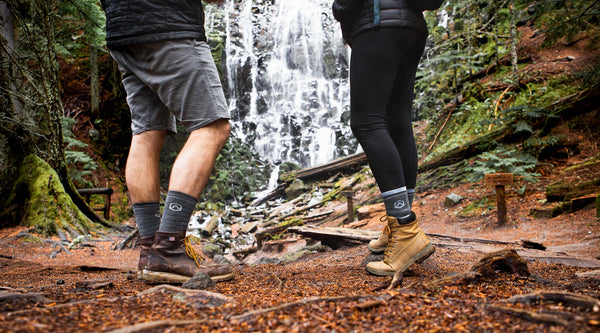
Cushioned throughout, crew height, knit in the USA. Rated 4.94/5 by 255 hikers. Also in women's sizing.
3. Go taller: crew or over the calf
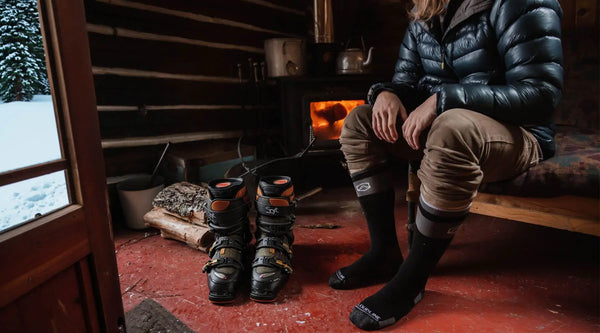
Ankle socks leave a cold gap where snow and wind get in. For winter, wear at least crew height. Over the calf socks are warmest of all because they cover your whole lower leg, and they're the right choice for ski boots, tall winter boots and deep snow. For skiing and snowboarding, see our guide to how to choose ski socks.


Full-length coverage and cushion for ski boots and tall winter boots. Also in women's sizing.
4. Don't overstuff your boots
It sounds backward, but the thickest sock isn't always the warmest. If your boots feel tight, a thick sock (or two pairs at once) gets crushed flat, loses its insulating air and squeezes your foot. That slows blood flow, and your toes get colder. You should be able to wiggle all five toes. If you can't, go one cushion level thinner or size up your winter boots.
5. Keep your feet dry
Wet feet are cold feet. Wear waterproof boots in snow and slush, add gaiters to keep snow out of your boot tops, and swap into a dry pair of socks at lunch on long days. On overnight trips, keep one pair just for camp and sleeping. Our guide to dealing with wet feet on the trail has more tips.

One pair to wear, one drying and one dry pair for camp. Rated 4.92/5 by 108 hikers. Also in women's sizing.
6. Warm your core first
When your body gets cold, it protects your organs by sending less warm blood to your hands and feet. That's why your toes are often the first thing to go numb. A warm hat, an extra layer and regular snacks keep your core warm, so more warmth reaches your feet. Here are 11 more ways to stay warm on winter adventures.

7. Bring backup warmth
Pack a spare pair of socks in a zip bag, and keep chemical toe warmers handy for long breaks or sitting still in the cold. Stick toe warmers on the outside of your sock, not against bare skin. At camp, change into dry socks before you get cold, and keep tomorrow's pair in your sleeping bag so they're warm in the morning. If your toes start to go numb, stop, wiggle them and warm them up before you keep going.
Which warm socks are best for hiking, work and everyday?
| If you're... | Choose |
|---|---|
| Hiking or snowshoeing in winter boots | Medium cushion merino, crew height |
| Skiing or snowboarding | Over the calf ski socks, medium cushion for cold days |
| Working long shifts outside | Medium cushion merino work socks |
| Winter running | Light cushion merino, quarter or crew height |
| Commuting and everyday wear | Light or medium cushion merino, crew height |
| Sitting still in extreme cold | Medium cushion merino plus toe warmers, or heated socks |
When are cold toes a warning sign?
Cold toes are normal in winter, but some signs mean it's time to stop and warm up right away. Numbness, skin that turns white or grayish-yellow, or skin that feels hard or waxy can be early signs of frostbite, according to the Mayo Clinic. Get somewhere warm, remove wet socks and rewarm your feet gently. Don't rub them.
If your toes get painfully cold, numb or change color often, even indoors, talk to a doctor. Conditions like Raynaud's and poor circulation can cause it, and warm socks help but aren't a fix on their own.
Frequently asked questions
What are the warmest socks?
For active use, the warmest socks are cushioned merino wool socks at crew or over the calf height that fit your footwear without squeezing. Battery-heated socks give the most heat for sitting still in extreme cold, but they're bulky and need charging.
Is merino wool or alpaca warmer?
Both are very warm. Alpaca is often blended with other fibers because pure alpaca socks are less stretchy and less durable. Merino blends are the more practical choice for hiking and active wear because they stay snug, wick sweat and hold up to long days.
Are thicker socks always warmer?
Only if your boots have room for them. A thick sock in a tight boot gets crushed flat and squeezes your foot, which cuts circulation and makes your toes colder. Choose the warmest sock that still lets you wiggle your toes.
Should I wear two pairs of socks in winter?
Usually not. Two pairs often make boots too tight and trap sweat between layers. One well-fitting, cushioned merino sock is warmer for most people. A thin liner under a merino sock can help if your boots have extra room.
Do wool socks keep your feet warm when wet?
Yes. Wool keeps insulating when damp, which is why merino socks are the go-to for winter hiking. They aren't magic, though. Change into a dry pair as soon as you can.
Why are my feet always cold in winter boots?
The most common causes are sweaty or wet socks, cotton socks, boots that are too tight, and a cold core. Try a merino sock, make sure you can wiggle your toes, and add an extra layer up top.
Warm toes all winter
Cushioned merino wool socks, knit in the USA and backed by a lifetime guarantee.
Men's hiking socks → Women's hiking socks →Lifetime guarantee · Free US shipping over $75
More gear guides posts
See all
Our warmest socks
Shop all-
Medium Cushion
Men's Merino Wool Ski & Snowboard Sock - Medium Cushion
Regular price $ 20.99 USDRegular price$ 26.99 USDSale price $ 20.99 USDSale -
Medium Cushion
Women's Merino Wool Ski & Snowboard Sock - Medium Cushion
Regular price $ 20.99 USDRegular price$ 26.99 USDSale price $ 20.99 USDSale -
Ultralight
Men's Merino Wool Ski & Snowboard Sock - Ultralight
Regular price $ 18.99 USDRegular price$ 24.99 USDSale price $ 18.99 USDSale -
Ultralight
Women's Merino Wool Ski & Snowboard Sock - Ultralight
Regular price $ 18.99 USDRegular price$ 24.99 USDSale price $ 18.99 USDSale


Trail notes and first dibs
New guides, restocks and outdoor stories, a couple of times a month.